
After reflecting on my experiences, I grew curious about what I truly carried within myself. Was I simply shy, an introvert who might find peace in the contemplative life of a monastery, or perhaps an extrovert trapped inside a socially anxious mind? To begin answering these questions, I decided to seek professional help. I began searching for psychiatrists, psychologists, and therapists in her area, although at first, I wasn’t sure what the differences were between these professions.
The process felt surreal. I had never imagined reaching out to mental health specialists. Until now, my perception of mental illness had been shaped by the society around me, and that society often painted a picture of someone who had lost awareness of themselves. In everyday conversation, people would ignorantly use the word “mad” to describe such an individual. Now that I was confronting my own need for help, I recognized that the term carried stigma and misunderstanding. This realization challenged my assumptions, and I sought to understand what mental health truly meant.
After a brief search, I settled on one specialist. I was drawn to him because we shared a research interest. He ran a research organization, and after years of conducting analysis, I had begun to develop an interest in health research. The appointment was scheduled for December 2nd. On the day, I was shown into the waiting room. It was a simple space, dressed mostly in brown hues. At one end stood a tall wooden cupboard that reached the ceiling, and at the other, a television was mounted on the wall. Between them were cushioned seats arranged to face each other. I barely noticed the program airing on the screen as my mind was preoccupied with questions. How would the conversation unfold? Would it confirm my suspicions?
As the minutes dragged on, I grew uneasy and wondered why I had been kept waiting so long. I had seen videos online where mental health professionals recorded client sessions, and the thought crossed her mind: Did they have surveillance cameras in the waiting room? Perhaps they were monitoring my behavior. What would arms or legs crossed indicate to the clinicians? Should I watch the television or pull out my phone and pretend to read something important? I laughed at the thought, but the anxiety beneath it was real. Finally, after what felt like an eternity, I was led into the consultation room on the first floor of what had once been a residential house. I ascended a dimly lit wooden stairway, and a few steps squeaked, reminding me of the horror movies she had watched in my late teens under the influence of my brothers.
The room was elongated and spacious. At one end stood a desk with papers stacked in careful order, and at the other was the doctor’s desk, set adjacent to a large window. His presence carried the air I instinctively associated with professors and psychiatrists, tall, heavy‑built, and wearing glasses. He ushered me to take a seat opposite him. The chair was placed about two meters away, perhaps a remnant of the distancing arrangements from the COVID period. The space felt intimidating. Would I be able to project my voice across it? I sat anyway, managing a sheepish smile. Silence followed. The doctor continued typing on his laptop, and I felt the awkwardness settle in. What was I supposed to do in the meantime? I guessed he must have been completing notes from the previous session.
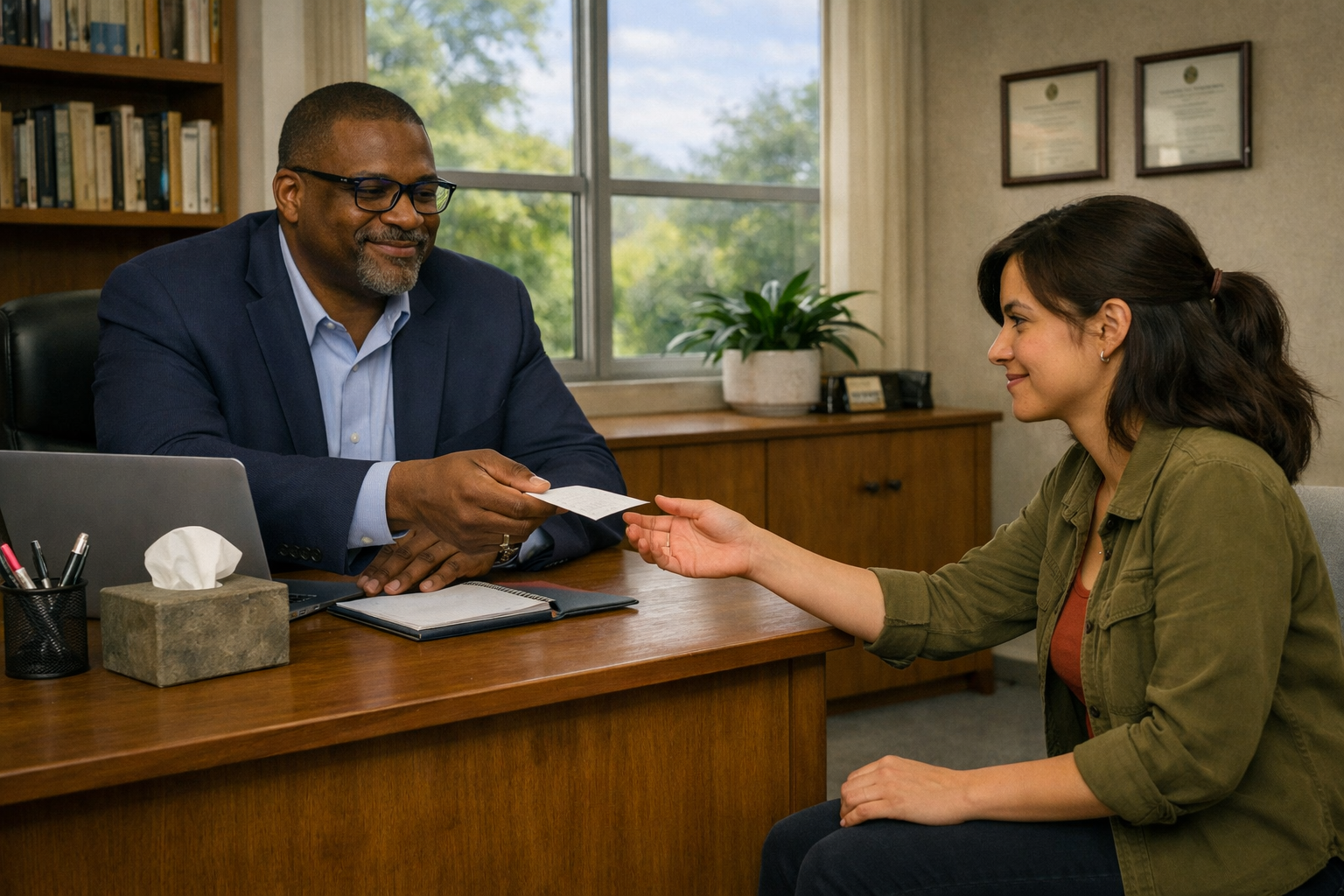
After what felt like five minutes, the doctor finally looked up and introduced himself. He then asked me to do the same and explain why I had come. At that moment, I burst into tears as I recounted my experiences in social situations, especially at work. The excuses I gave to avoid social functions, the nervousness that gripped me during presentations, the inability to initiate conversations, and the way I took feedback too personally. Together, we explored other everyday situations that others seemed to manage with ease, like boarding a bus and ordering food in a restaurant. After this brief exchange, the doctor confirmed I had what he referred to as social phobia and prescribed some medication.
The diagnosis left me with mixed emotions. On one hand, I felt relieved that finally, there was a name for what I had been experiencing. On the other hand, I felt confused. I didn’t yet know what a full assessment process looked like, but I had anticipated a deeper dialogue over a couple of sessions, perhaps even some tests. Was such a brief conversation enough for a diagnosis?
 Social Anxiety Unmasked
Leave a comment