
The Music She Never Played
Ann, Nia’s elder sister was a natural. Her voice commanded stages, her presence filled auditoriums, and her flute carried melodies that won competitions at the national level.
“You should consider music, Nia,” Ann had told her once, with the confidence of someone who had never doubted her place in the world. “Learning an instrument sharpens your mind. It helps with focus, and concentration. It’ll do you good.”
Nia had nodded, letting the words sink in. She wasn’t sure if she had the talent, but Ann believed in her. And that was enough.
So when she joined Form One, she signed up for music class.
Ms. Karanja was warm and lively, someone who believed every student had potential. The flute was their first instrument, introduced to them as both a skill and a foundation.
At first, Nia practiced in private, hesitant but curious. She was good. Alone in the dorm or the empty classroom, her fingers moved naturally, her breath steady, her notes clear.
But the classroom was different. Here, Ms. Karanja called students one by one to the front, asking them to play simple melodies for the class. No pressure, she assured them. Except, for Nia, there was.
When others played, she watched in silence, gripping the flute in her hands.
She thought about Ann. Would she have been afraid?
Her turn came.
A wave of heat crept up her neck and settled in her cheeks, creating an uncontrollable flush. A bead of sweat formed at her temple, followed by another at the back of her hands, making the flute slippery beneath her grip. While her heartbeat had been slow and steady in private, it now pounded against her ribs. She swallowed, but her throat felt tight, as if it were refusing to let air through. Her fingers, steady just an hour ago, trembled as she held the flute.
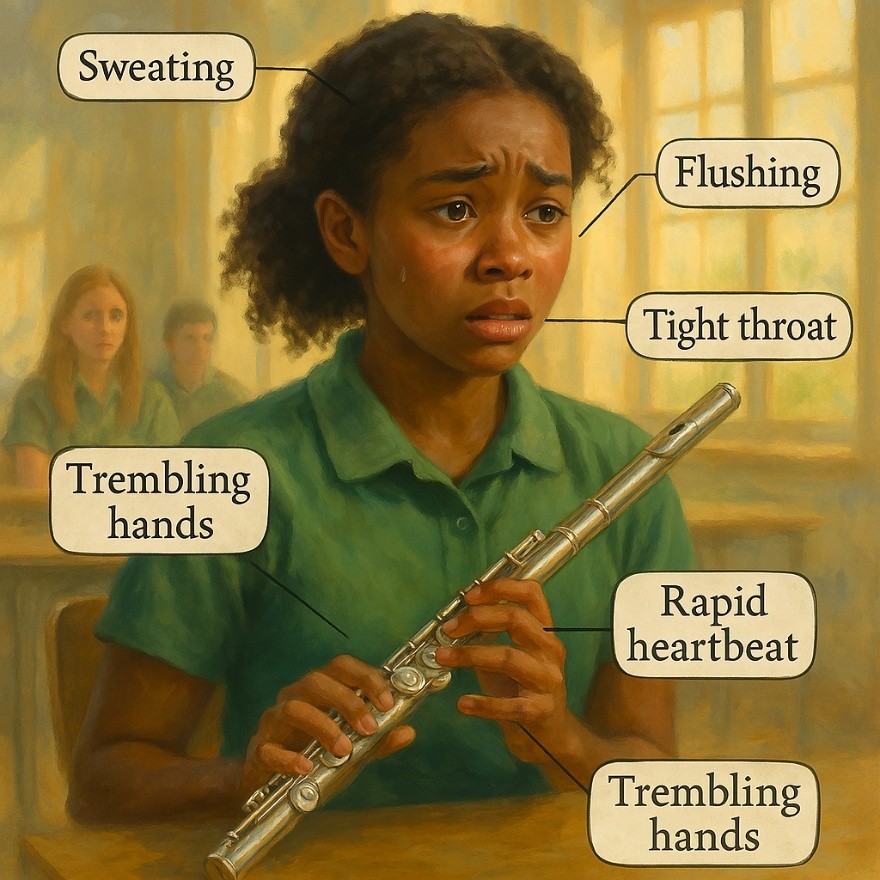
She lifted the instrument, forced herself to begin. The first note wavered. The second faltered.
Ms. Karanja was patient. “Try again,” she encouraged softly.
But the panic was already sinking in the knowledge that she was failing where it mattered most. “I think I need more practice first,” she whispered.
Ms. Karanja hesitated, but then nodded.
She stopped attending music classes soon after. Not because she didn’t love it, but because she couldn’t face the panic again. She told herself it was the right choice, that maybe music wasn’t for her after all.
The Words She Never Spoke
For weeks, she had watched them from the sidelines.
Jane glided across the tennis court with precision, her swings effortless, her movements sharp. Just as skilled, Shamim ruled the badminton court with swift, calculated reflexes.
Nia imagined herself on the court, gripping a racket, feeling the weight of a game in motion. The thought thrilled her. She wasn’t just interested, she wanted to play. All she needed was to ask.
She had rehearsed the words. “Hey, Jane, I’ve been thinking about trying tennis. Could you help me get started?” “Shamim, I want to learn badminton. What do I need?”
She had also thought about speaking to Coach Kamau, the teacher in charge of court games. Maybe if she asked him first, she wouldn’t feel the pressure of speaking to Jane or Shamim. Perhaps, he would guide her and make the transition easier.
She said the words in her mind, over and over.
“Excuse me, Coach, I’ve been thinking of trying badminton.” “Sir, how does one enroll for training?”
They sounded right in her thoughts.
She saw him walking across the courts before practice, stopping to speak to a small group of students. This was her chance, but her body betrayed her. Her pulse quickened. Her breath, steady just a moment ago, grew shallow and uneven.
She couldn’t do this.
The words that had once flowed so easily in the quiet of her thoughts now felt impossible to say.
She hesitated.
The perfect moment passed.
Then another. And another.
Soon, the term ended. The courts remained filled with laughter, with confident strides and victorious plays without her.
She never asked.
She never played.
The Role She Never Played
Nia pressed herself against the wall, willing her body to shrink into the shadows of the crowded common room. The voices around her buzzed with excitement, laughter, nervous murmurs, and bold declarations from those who couldn’t wait to show off their acting skills. It was audition day for the inter-house drama competition, and her house was in search of fresh talent among the new students.
The scene they were supposed to audition with had already been explained: an expectant mother in excruciating pain at a bus stop. Some of the older girls giggled at the absurdity of the prompt, while others eagerly stepped forward. Their faces contorted into expressions of agony as their voices rose in exaggerated cries.
But Nia?
Nia tucked herself behind the group, careful not to stand where she could be seen. She could not- would not act out such a scene in front of a room full of people. To contort her face, wail in mock distress, flail her arms for dramatic effect? Impossible. The very thought of all those eyes watching and judging made her stomach turn.
The older students scanned the crowd, calling names. She held her breath.
“Nia?”
A shiver ran down her spine. She pretended not to hear.
“Nia, come on!”
Emily nudged her forward, and a wave of panic rose in her chest. She shook her head quickly, eyes glued to the floor, hoping, praying they would move on.
“She’s shy,” someone whispered, half amused.
“Just try,” another voice chimed in.
The moment stretched long enough that the older students sighed and turned to someone else.
She continued to follow the same pattern during class presentations, debate auditions, and club sign-ups, always dodging, disappearing, and watching from the sidelines as others experienced the moments she feared to step into.
For Nia, avoidance, over-rehearsing conversations, and avoiding eye contact were safe escapes from discomfort, rising panic, and the fear of being watched. And for a while, they worked.
However, social anxiety isn’t something you escape.
It grows beyond classrooms and courtsinto new spaces, shaping choices, silencing voices, and stealing lifetime opportunities and experiences.
In Chapter 5, discover how avoidance only intensified Nia’s fear.
 Social Anxiety Unmasked
Leave a comment